
Trinamool Congress Faces Growing Challenges to Its Political Base in West Bengal
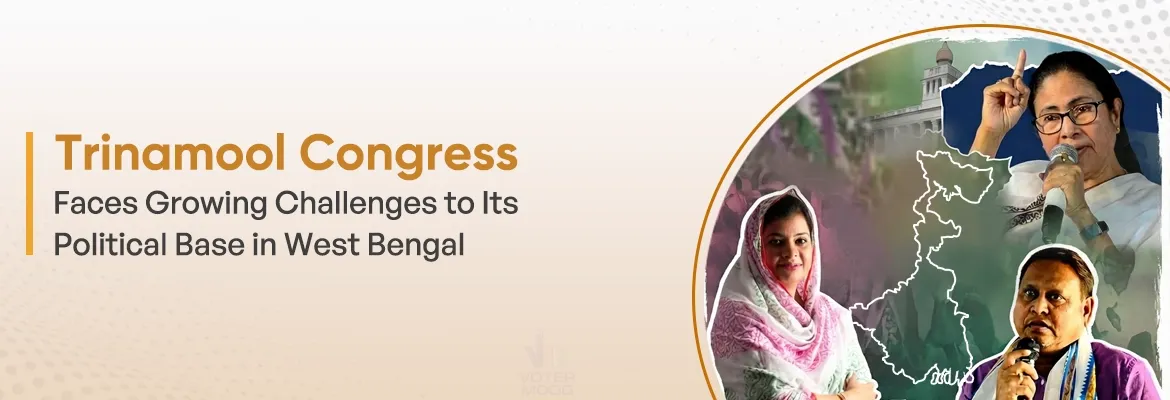
Trinamool Congress Rajya Sabha MP Mausam Benazir Noor has joined the Congress, a move being seen as a major boost for the party ahead of the 2026 West Bengal Assembly elections. Her return is expected to significantly alter political equations in North Bengal and Muslim-dominated regions. Coming from Malda’s influential Khan Chowdhury family, Mausam Noor’s re-entry into the Congress provides the party with both organisational strength and renewed political confidence in North Bengal and minority-concentrated areas.
A Strategic Blow to the Trinamool Congress
Mausam Noor’s exit is being viewed as more than an individual defection. It highlights the growing unease within the Trinamool Congress (TMC), particularly in districts where minority support has traditionally ensured the party’s electoral dominance. Her departure weakens the TMC’s hold in Malda and Murshidabad, regions that once formed the backbone of Mamata Banerjee’s political rise.
Congress Sees Opportunity for Revival
For the Congress, struggling to regain relevance in West Bengal, Mausam Noor’s return is politically symbolic. Her family legacy and grassroots connect offer the party a credible leadership face in North Bengal. The Congress hopes this move will help consolidate Muslim voters who had gradually shifted allegiance to the TMC over the past decade, largely due to the absence of strong Congress leadership on the ground.
Also Read: Mamata Banerjee Biography: Early Life, Education and Political Career
Internal Dissent and the Humayun Kabir Factor
The TMC’s challenges are also emerging from within. Leaders like Humayun Kabir have openly expressed dissatisfaction with party functioning and leadership decisions. While not officially breaking away, such voices of dissent threaten to weaken the party’s internal discipline and may lead to local-level vote splits, particularly in closely contested constituencies.
Owaisi’s AIMIM and Minority Vote Fragmentation
Another concern for the ruling party is the expanding political footprint of AIMIM chief Asaduddin Owaisi. Though AIMIM has yet to establish itself as a major force in West Bengal, its repeated attempts to mobilise Muslim voters pose the risk of fragmenting the minority vote. Even marginal divisions could erode the TMC’s winning margins, indirectly benefiting opposition parties.
Road to 2026: A Tougher Political Battle Ahead
Despite remaining the dominant political force in the state, the Trinamool Congress is now facing a more complex and competitive political environment. High-profile exits, internal dissent, and external challenges indicate that its political base is under pressure. As the 2026 Assembly elections approach, the TMC may have to work harder to retain the trust of its core voters, while the Congress and other opposition forces look to capitalise on emerging cracks in Bengal’s ruling party.

VoterMood is a platform for democratic engagement. Information on this platform is meant for public awareness and participation. Users are encouraged to engage responsibly and respect democratic principles.

2026 © VoterMood - Powered by  Zentek Infosoft.